

Introduction
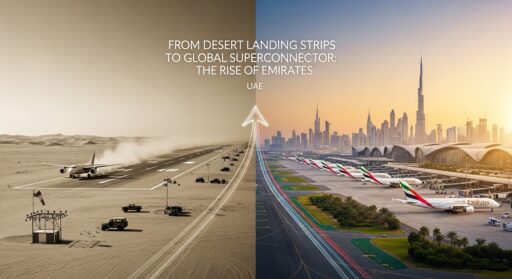
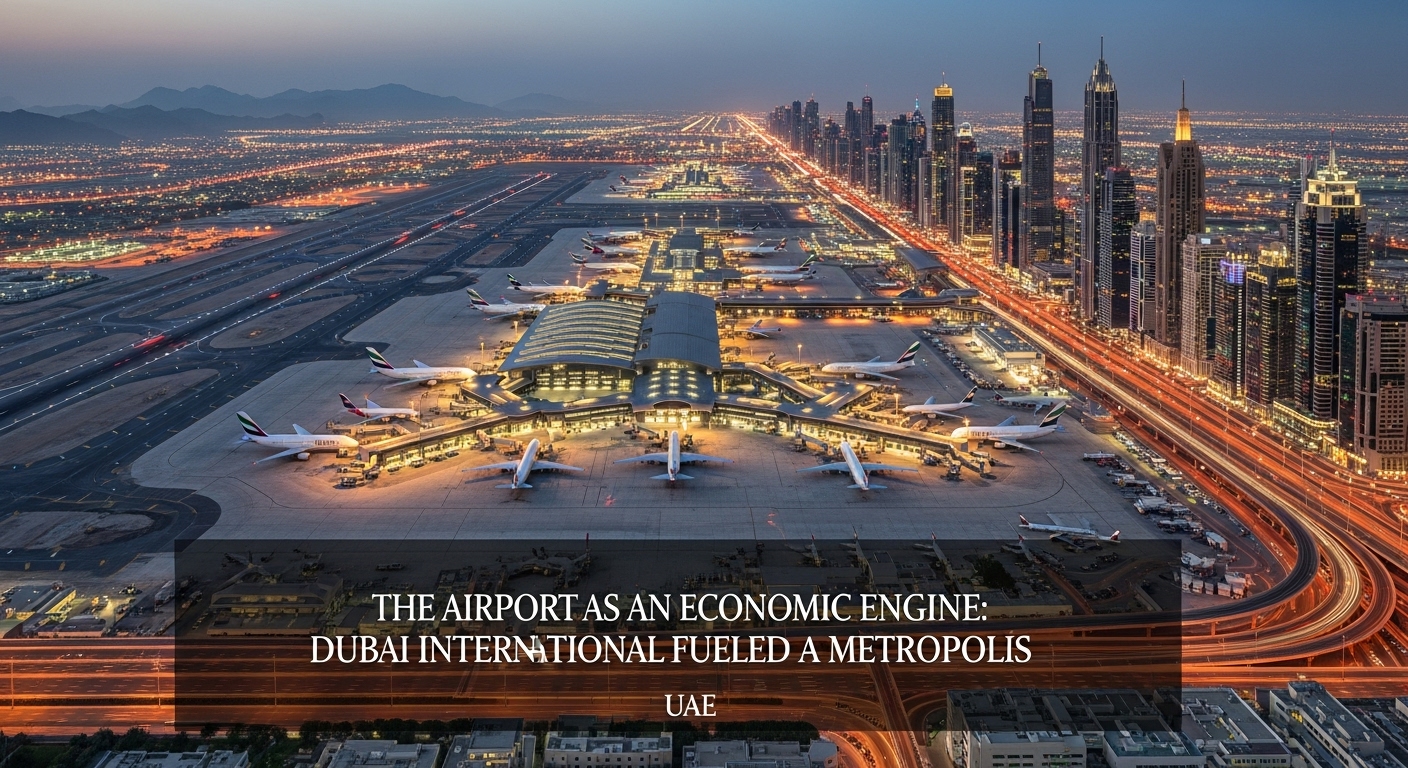
While skyscrapers and luxury hotels define Dubai’s skyline, the true heartbeat of the emirate is its airport. Dubai International (DXB) is more than a transportation facility; it is the primary economic engine that powers the city. The concept of the “aerotropolis”—a city whose planning and economy revolve around an airport—finds its ultimate expression in Dubai. From a simple airstrip established by the British in the 1960s, DXB has been strategically developed into the world’s busiest airport for international passengers, a global hub for trade and tourism that generates immense wealth and opportunity. This article explores how Dubai’s leaders masterfully leveraged aviation infrastructure to build a world-class metropolis from the desert.
History
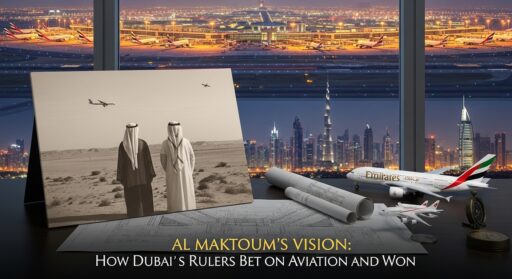
The story of DXB begins in 1960 with the construction of an airstrip by the Royal Air Force. Its potential was immediately recognized by the then-ruler, Sheikh Rashid bin Saeed Al Maktoum. The first terminal building, a modest structure, opened in 1960. The pivotal moment came in the 1980s with the launch of Emirates airline, which created the demand for a world-class hub. A new terminal was built specifically for Emirates in 2000 (Terminal 3), and the airport never looked back. Continuous expansion followed, including the massive Concourse A for the A380, transforming DXB into a city within a city. Its growth was not accidental but a direct result of a clear, long-term strategy to use aviation as the catalyst for economic development.
Key Features
The economic power of DXB is driven by several key features:
- Connectivity: DXB’s vast network of over 240 destinations connects Dubai directly to global markets, making it an irresistible location for multinational corporations’ regional headquarters.
- Cargo Hub: Dubai International is also one of the world’s top cargo airports. Dubai World Central (DWC), the city’s second airport, is envisioned as the future mega-hub for cargo and logistics, further cementing the city’s role as a global trade nexus.
- Efficiency and Scale: DXB is engineered for high-volume transit. Its design, while often operating at full capacity, facilitates the smooth movement of millions of passengers, with relatively short connection times that are critical for a successful hub.
- Integrated Economic Zones: The airport is surrounded by specialized free zones like Dubai Logistics City and Dubai South, which leverage the airport’s connectivity to attract businesses in logistics, e-commerce, and manufacturing, creating a powerful synergistic effect.
Cultural Significance
DXB is the primary gateway through which the world experiences Dubai and the UAE. For millions of visitors, the airport is their first and last impression, and its scale, modernity, and luxury shopping (a core revenue driver) set the tone for the entire city. For residents, the airport symbolizes Dubai’s openness to the world. It is a place of constant arrival and departure, a melting pot of cultures and nationalities that defines the city’s cosmopolitan character. The airport’s ability to handle the annual influx of visitors for events like the Dubai Shopping Festival and Expo 2020 has become a point of national pride, showcasing Emirati organizational prowess on a global stage.
Modern Relevance
The economic impact of DXB is staggering. Pre-pandemic studies estimated that aviation, led by DXB and Emirates, supported over 20% of Dubai’s employment and nearly 30% of its GDP. The airport is a massive direct employer and, more importantly, an enabler for the entire tourism, hospitality, and retail ecosystem. As Dubai looks to the future, the success of DXB has validated its aviation-centric model. The ongoing development of Al Maktoum International Airport (DWC) at Dubai World Central as the future flagship airport, designed to handle over 200 million passengers annually, demonstrates a commitment to doubling down on this winning strategy for the 22nd century.
Conclusion
Dubai International Airport is the quintessential example of infrastructure as a strategic investment. It is the physical manifestation of Dubai’s philosophy that to thrive, a city must be connected. The billions invested in its runways and terminals have yielded trillions in economic activity, transforming a regional trading post into a global center of commerce, tourism, and culture. DXB is not just where Dubai’s economy happens; in many ways, it is the economy. Its continued growth and the planning for its successor ensure that the steady hum of aircraft engines will remain the soundtrack to Dubai’s prosperity for generations to come.