

Introduction
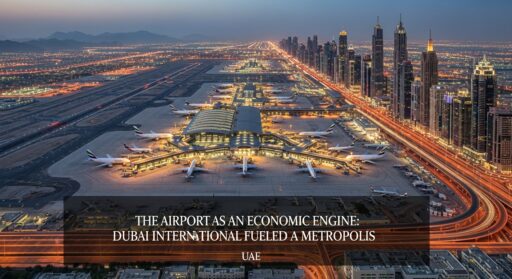
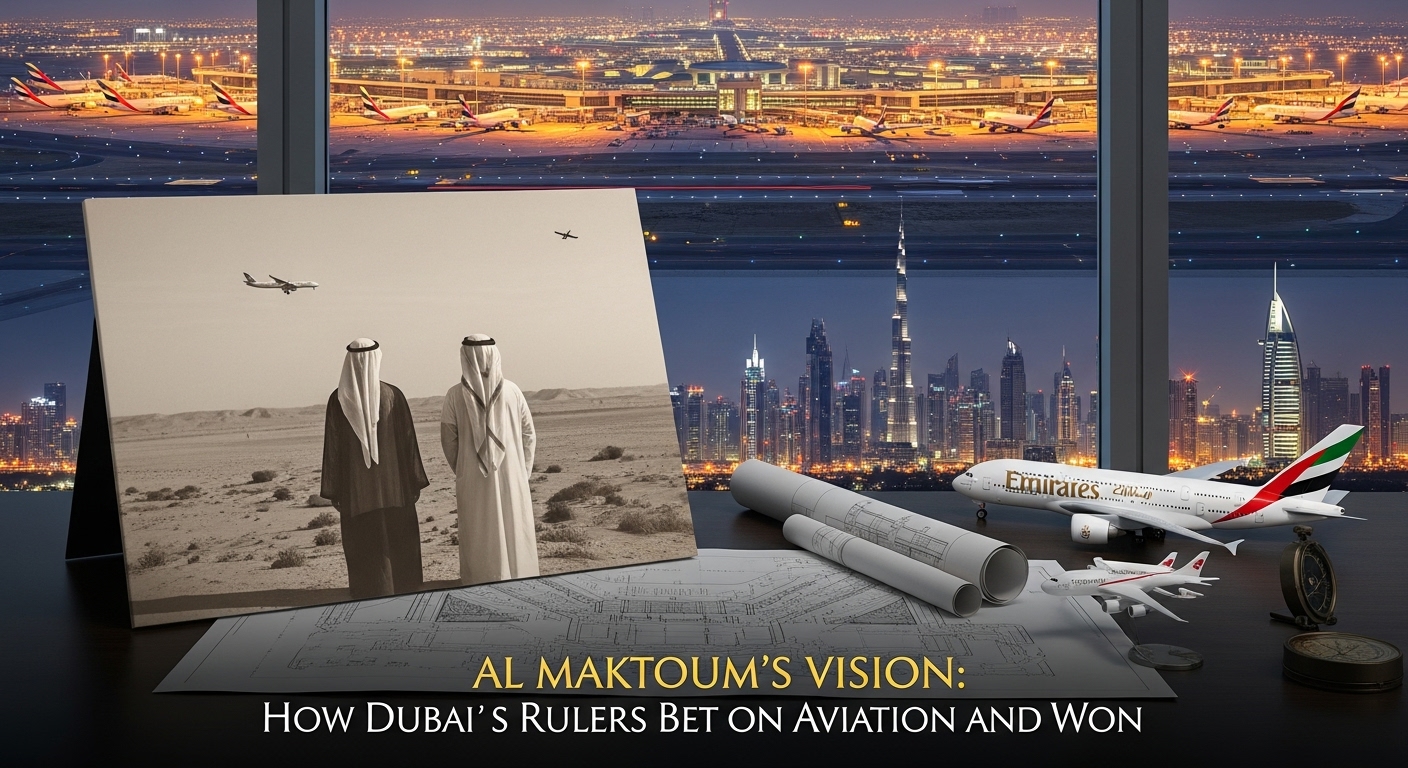
The towering silhouette of the Burj Khalifa may be Dubai’s most famous landmark, but the true monument to its rulers’ foresight is the constant stream of aircraft descending over the city into Dubai International Airport. The emirate’s ascent as a global aviation powerhouse was not a happy accident; it was the result of a deliberate, multi-generational strategy conceived and executed by the Al Maktoum family. From Sheikh Rashid bin Saeed Al Maktoum’s early recognition of its potential to Sheikh Mohammed bin Rashid Al Maktoum’s relentless drive to make Dubai the “global aviation capital,” this vision has been the single most important catalyst for the city’s modern identity and prosperity. This article delves into the visionary leadership that bet the future of Dubai on the wings of an airplane.
History
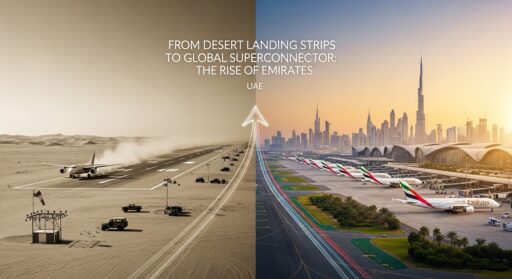
The story begins with Sheikh Rashid bin Saeed Al Maktoum, the architect of modern Dubai. In the 1950s, he used loans to dredge the Creek, understanding that trade was Dubai’s lifeblood. This same foresight was applied to aviation. When the British built an airstrip in 1960, Sheikh Rashid immediately grasped its strategic importance. He invested in the first terminal, believing that for a trading city, connectivity was everything. The foundational decision, however, came in the 1980s. Faced with Gulf Air’s reduced services, his son, Sheikh Mohammed bin Rashid Al Maktoum (then Crown Prince), and Sheikh Ahmed bin Saeed Al Maktoum, made the pivotal choice not just to find a replacement, but to launch their own airline—Emirates—and control their own destiny.
Key Features
The Al Maktoum aviation vision is characterized by several key principles:
- Long-Term Horizon: The leaders thought in decades, not years. Investments in airport infrastructure and massive aircraft orders were made with the long-term growth of the city in mind, often before the demand fully existed.
- Autonomy and Control: The decision to create Emirates as an independent entity, free from the constraints of a multinational consortium, was crucial. It allowed Dubai to capture all the economic benefits and make agile, strategic decisions.
- Infrastructure First: The philosophy was to “build it and they will come.” They continuously expanded the airport ahead of demand, ensuring that capacity never became a constraint on growth. This is now being replicated on a grander scale with Dubai World Central (DWC).
- Synergistic Development: Aviation was never seen in isolation. It was integrally linked to the development of tourism, real estate, and trade. The success of one sector would fuel demand for the others, creating a powerful virtuous cycle of growth.
Cultural Significance
This unwavering focus on aviation became a core part of Dubai’s governing culture and national identity. It embodied the Bedouin values of hospitality (Al Dhiafa) on a grand scale, positioning Dubai as the “host” to the world. It also fostered a culture of ambition, risk-taking, and thinking big—what Sheikh Mohammed often calls “No such word as impossible.” For the people of Dubai, the success of this vision created immense pride and a deep trust in their leadership, seeing how a bold idea could translate into tangible prosperity and global stature. The airport and airline became symbols of what Emirati ambition, when coupled with strategic execution, could achieve.
Modern Relevance
The bet on aviation has paid off beyond anyone’s wildest dreams. Aviation is the central nervous system of Dubai’s diversified, knowledge-based economy. The vision, however, is not complete. The development of Al Maktoum International Airport (DWC) at Dubai World Central is the next chapter. Envisioned as the world’s largest airport with a capacity for over 200 million passengers, it is designed to support Dubai’s growth for the next 100 years. This project underscores the enduring nature of the Al Maktoum vision—a commitment to ensuring that Dubai remains at the forefront of global aviation and trade long after the current generation is gone. It is a vision that continues to guide the emirate’s investments in space exploration, drone logistics, and sustainable aviation technologies.
Conclusion
The story of Dubai is, in many ways, the story of its aviation strategy. The Al Maktoum family’s genius lay in recognizing that in a globalized world, the most valuable real estate was not on the ground, but in the network of routes connecting global cities. By betting big on this idea and executing it with relentless focus and courage, they transformed a small trading post into a nexus of global commerce and culture. The sight of an Emirates A380 taking off against the backdrop of the Dubai skyline is more than just a pretty picture; it is the embodiment of a visionary leadership that understood that a nation’s destiny is not written in the stars, but charted in its flight paths.