

Introduction
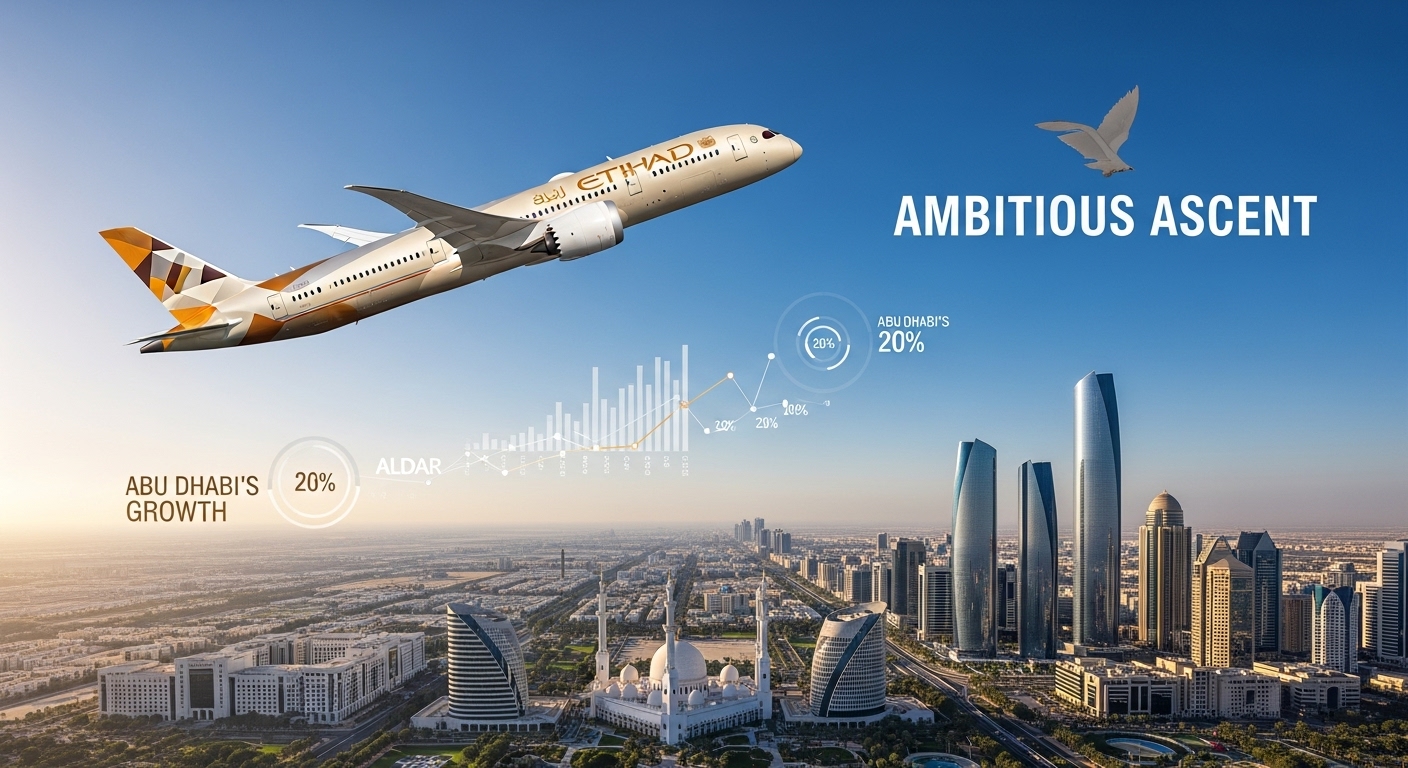
If Emirates was Dubai’s bold gamble on globalization, then Etihad Airways was Abu Dhabi’s strategic and equally ambitious response. Launched in 2003, Etihad—whose name means “union” in Arabic—entered a crowded market with a clear mandate: to put the UAE’s capital on the global map and diversify its economy beyond oil. With the deep financial resources of Abu Dhabi behind it, Etihad embarked on a meteoric rise, characterized by rapid fleet expansion, a luxury-focused brand, and an innovative, though ultimately challenging, “equity alliance” strategy. This article explores the ambitious ascent of Etihad Airways, its role in shaping modern Abu Dhabi, and the strategic recalibration that defines its present and future.
History
In the early 2000s, as Dubai’s profile soared on the wings of Emirates, Abu Dhabi, the oil-rich capital of the UAE, laid its own plans for a post-oil future. The launch of Etihad Airways in November 2003 was a cornerstone of this strategy. Starting with a ceremonial flight to Al Ain, the airline began commercial operations with a leased Boeing 777. Under the leadership of its visionary first CEO, James Hogan, Etihad grew at a breathtaking pace. It pursued an aggressive growth strategy, ordering hundreds of new aircraft and launching routes to key global capitals. Its ambition was not just to be another airline, but to be the world’s leading luxury carrier, a statement of Abu Dhabi’s sophistication and global aspirations.
Key Features
Etihad’s strategy was distinguished by several key features:
- The “Etihad Guest” Program: The airline developed a highly successful frequent flyer program that became a valuable asset in its own right, creating a loyal customer base and a significant revenue stream.
- Uncompromising Luxury: Etihad sought to out-luxury its competitors. The introduction of “The Residence” on its A380s—a three-room suite in the sky with a living room, bedroom, and private shower—became the ultimate symbol of in-flight opulence.
- The Equity Alliance Strategy: In a bold move to rapidly gain scale and connectivity, Etihad purchased strategic stakes in several struggling airlines, including Air Berlin, Alitalia, and Jet Airways. The goal was to create a mini-alliance that would feed traffic into its Abu Dhabi hub.
- Abu Dhabi as a Hub: Unlike Dubai’s purely transit-oriented model, Etihad’s strategy was also deeply tied to promoting Abu Dhabi itself as a destination for tourism, business, and culture, supporting projects like Saadiyat Island and the Louvre Abu Dhabi.
Cultural Significance
For Abu Dhabi, Etihad was a powerful symbol of its emergence as a global capital. It projected an image of refined, cultured, and sustainable growth, distinct from Dubai’s breakneck commercialism. The airline became a source of immense national pride for Emiratis, particularly those in the capital, embodying the values of hospitality (Al Dhiafa) on a global scale. The creation of thousands of high-skilled jobs also accelerated the development of a professional, multinational workforce in Abu Dhabi, further integrating the emirate into the global mainstream and fostering a more diverse and cosmopolitan social fabric.
Modern Relevance
The airline industry is one of fierce competition and thin margins. Etihad’s ambitious equity strategy proved financially unsustainable, leading to significant losses as its partner airlines faltered. This prompted a major strategic shift around 2017 towards a more conservative and commercially focused business model. The focus moved from rapid growth to sustainable profitability, restructuring its fleet and network. Today, Etihad plays a crucial, if more measured, role in Abu Dhabi’s economy. It remains a vital connector for business and tourism, supporting the emirate’s economic diversification goals. Its current strategy emphasizes sustainability, with a focus on operating a modern, fuel-efficient fleet and ambitious targets for reducing carbon emissions, aligning with the UAE’s broader national agenda.
Conclusion
The story of Etihad Airways is a compelling chapter in the UAE’s development, illustrating both the immense possibilities and the formidable risks of high-stakes global ambition. Its initial, turbo-charged ascent demonstrated Abu Dhabi’s determination to compete at the highest level and provided a dramatic catalyst for the capital’s transformation. While its journey has been more turbulent than that of its neighbor Emirates, the strategic recalibration it has undergone showcases a maturity and resilience essential for long-term survival. Etihad remains a key pillar of Abu Dhabi’s global identity, a testament to the fact that the path to becoming a global aviation player is not always a straight line, but a journey of adaptation and learning.